Bedok

Bedok is both a planning area and a town located in Singapore’s East Region. By population it is the largest planning area on the island, with almost 290,000 residents calling it home. In area it covers 2,157 ha (8.37 square miles), and has the coastline as one of its boundaries, as well as the planning areas of Paya Lebar, Hougang, Tampines, Geylang and Marine Parade.

Bedok Town
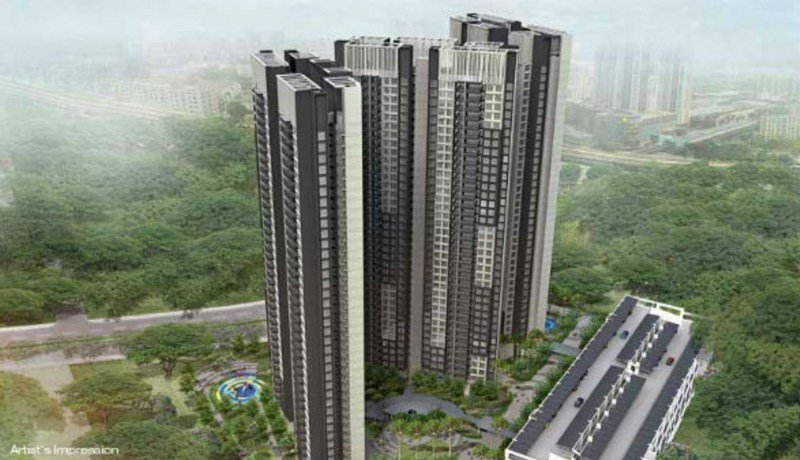
Artist Impression of Bedok Town (Source: HDB)


Historically, Bedok is significant as it is one of the few place names in Singapore that still exists from the days of Sir Stamford Raffles, as evidenced by its presence in the map of the island drawn up in 1828. The history of Bedok actually goes back considerably further however. Manuel Godinho de Erédia’s 1604 map of Singapore features Sune Bodo, referring to the modern day Sungei Bedok. Bedok is thought to derive its name from the Malay word for drum – bedoh (pronounced bedok), referring to the large slit drums that were used to call worshippers to prayer. There is an alternative argument however that suggests it actually comes from the Malay word biduk, meaning a small fishing boat or canoe, that would have been prevalent along the east coast at that time, due to the large number of fishing villages that were dotted along the shore.

Read more

Sembawang – Hanging on to its Roots

There are many things that are unique about Sembawang. Most, if not quite all of them are down to its location. It is perched on the northern most tip of Singapore’s North Region, and is the most northerly part of the nation. In fact, it is much closer to Johor Bahru (just a kilometre away over the Straits of Johor) than it is to Singapore’s CBD.


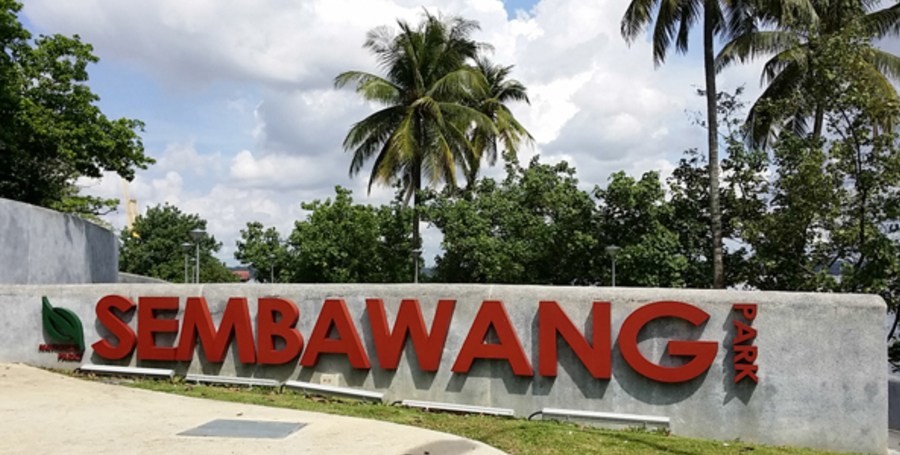
Sembawang Park
Sembawang Park (Source: BCA)


Much of its history, character and charm comes from its relationship with the sea, but its name is very much land based in nature, which is believed to come from the local name for the Mesua ferruginea tree – the Sembawang, some examples of which are still dotted around the area. Sembawang is also home to Singapore’s only mainland natural hot spring. Its waters, which can be accessed via nearby taps, are still taken by visitors every day, and are said to be able to relieve such ailments as arthritis and eczema.

Read more

HDB set to cut the relate transaction time in half

Reselling or just selling can take up to 16 weeks, but HDB is set to cut that amount of time in half. The way they want to do that is via a revamped HBD portal that will work faster and better. The focus here is on making sure that you deal with less appointments, and at the same time it will showcase the HDB resale transaction trove to give you the very best experience and results.


It seems that the entire thing is rather serious, and the focus here is on making sure that people get to sell or resale a home a lot faster. It seems that this will also make the process of conducting eligibility checks or filing transactions a whole lot easier. This also means that the documents can be uploaded and verified online.

Read more

80,000 Singaporeans set to receive construction technology training until 2025


According to the BCA, they are set to train 80,000 Singaporeans until 2025 in order to make sure that the latest construction technologies are used in a proper and affordable manner. Apparently, in the past few years there was a dwindling interest from the younger Singaporeans when it comes to this industry. However, the focus here is on offering a lot more training and better pay for the locals.


Instead of dealing with people from outside the country that deliver a lower quality of work, opting for a better quality delivered in your own country is definitely a very good idea. That being said, the market conditions are quite demanding to be honest, and that’s why making sure that you harness them in a good manner can be a very good idea.


While it can be taxing for the economy in the beginning, adding 80,000 Singaporeans to the construction technology workforce is certainly for the better. It really goes to show that including things like this is set to work a lot in the end, and it will surely offer you a tremendous quality for the local constructions. Right now, there are still some issues to be dealt with, so removing those in a proper manner is a priority and a pivotal one for sure.


Using new technologies like PPVC for example has managed to turn the tide of construction and engineering in Singapore. The constructions are created pretty much like giant LEGOs, with each new piece being put in order to deliver a tremendous quality and value all the time.


And by investing in manpower, there will be less work incidents, faster completion times and a cleaner construction site as well. These are things that the local government wants to implement and the BCA is certainly going to provide that sort of idea for sure. It’s a delightful and distinct approach for you to have, but at the same time it will end up bringing in tremendous quality and value in the near future for the people that want to join this approach.


Apparently, this means that Singapore doesn’t want to get more foreign workers. That doesn’t mean the current workers would be fired. The focus here is on keeping the same level of quality and value, all while making sure that the results would be a whole lot better in the end. There are lots of foreign workers with work permits here, so making sure that locals get to have this sort of feature is very important.


You have to keep in mind that adding 80,000 Singaporeans to the industry will be a huge step, but hopefully this will be backed up with a large budget and younger people would eventually see the value and quality that is set to be delivered here. For now, we can only hope that the results will be good and this implementation will have some great results. It all sounds very well, and a focus on local professionals is always important to be had!


New launch condos in Singapore


Developments that will be obtaining TOP

 

Rochor Centre ready to be torn down in 2018

The multicolored blocks in the Rochor Centre area will be removed very soon, and it seems that the new expressway set to be created here will be completed in 2026. The idea here is that the LTA awarded the Aik Sun Demolition and Engineering around $1.81million to complete the demolition as well as the reinstatement of the Rochor Centre buildings.


LTA is set to use the standard code of practice when it comes to demolition. Many studies are taken into account now to ensure that the process is safe, that there is no structure damage for the buildings nearby and so on. Even environmental issues are taken into account. The focus here is on making sure that buildings are created adequately and with some very good results.

Read more

Singapore – Digital Technology Training Is Underway For Older Cab Drivers

The SkillsFuture For Digital Workplace pilot program was formed to help cab drivers understand digital technology and over 60 drivers showed up for the event.


The use of digital technology and various applications including e-payment solutions such as internet banking, PayNow, and other business applications were demonstrated to cab drivers how to help them run more smoothly. These applications and technologies were offered by Republic Polytechnic (RP).

Read more

Turning the Zero Energy Building into a Positive Energy Building


Singapore’s Zero Energy Building (ZEB) is going to go even better, after an announcement detailing plans for it to be turned into a positive energy building. In a press release, issued jointly by The Building and Construction Authority (BCA) – who are behind the original ZEB – and an arm of the National Research Foundation that goes under the name of the Singapore-Berkeley Building Efficiency and Sustainability in the Tropics (SinBerBEST), the ambitious plans for the “office of the future” were announced.


The ZEB, a retrofitted 4,500 sqm complex that is home to classrooms, a resource centre as well as offices is the first of its kind in the region, and since launching in 2009 has already exceeded its original aim of being energy neutral. In each of the last 7 years, it has produced between 7% and 9% more energy than it has consumed. To put some context to those figures, compared with a similar sized “traditional” office block on the island, the ZEB achieves approximately S$84,000 a year in savings when it comes to energy costs.

Read more

Some housing precincts may be getting less carpark spaces


News broke in that a new residential system found right near the Kallang River may be one of the best places for those that want to get a unique parking space. Named Kampong Bugis, this will be a 17 ha area that will offer an open, unique way to get access to green spaces and establish a new community around this type of idea. At this current time, the reality is that most estates have a single parking space per unit.


The idea here is to offer a unique new concept that focuses on a car-less society. Cars are bad for the environment and the best thing we can do is to make sure that we avoid using them way too much. The car less approach is actually one of the best out there, because once you have a better connectivity, more people will choose public transport.


This is an issue that many countries have right now, the fact that a lack of car spaces is becoming increasingly annoying and problematic. But it can be solved with the right set of ideas and tools. Granted, it can take quite a lot of time to do something like this, but it will surely be worth it.

Read more

The Changi Garden En Bloc

Built between the 1970s and 1980s, Changi Garden was placed on the market for a collective sale for an asking price of $196 million.  Changi Garden just sold for an amazing $248.8 million which is 27% above the asking price!  This property consists of 60 apartments, 12 penthouses, and 12 shops.


Each owner of an apartment will receive between $2.14 million and $2.27 million.  Penthouse owners will receive between $4.03 million and $4.74 million and shop owners are going to get between $4.7 million to $7.08 million.

Read more

Even though Melbourne is the most livable city in Australia, few people can buy a home there

If there’s one thing that a lot of people have a hard time understanding, that would be the fact that getting a home is very expensive. Sure, you can opt for a loan and stuff like that, but repaying it takes most of your life. And there are some cities where home ownership is even costlier, such as country capitals and so on.


Melbourne is one of the cities in the world that seem to have one of the best livability features. There isn’t a ton of pollution, you have plenty of jobs and overall you get some really good results. But the best part about all of this is that you can try to get a home here and enjoy all of these benefits for yourself. Yet here lies the problem.


Even if Melbourne has a very good livability note, the reality is that a lot of people just can’t get a home in here. There’s a reason for that, which is the fact that home prices have surged with around 140% in the past 15 years alone. Prices in Melbourne are higher when compared to most of the other cities in Australia, and the problem is that getting a home here is really expensive, to the point it can be very hard for you to cope with things like this.


Moreover, housing in Melbourne has become a speculative financial feature. People are trying to get a home only to resell it for a larger price. This goes to show the shortage of homes in Australia and how hard it can be for some people to get the ultimate set of results.

Read more

A daring project will emerge on Beach Road after GuocoLand grabbed the available commercial site

A commercial site was put out for sale by the URA, the parcel with a surface of 950,593 sq. ft. having specific guidelines to be respected by the developer that will win the bid. According to URA, the future development could have up to 45 stories, although the majority of the space available must be dedicated to the making of offices. More precisely, 70% of the development has to be used in this direction, while the rest could easily be utilized for the making of residences, hotel, or shops, according to the future plans of the developer. In this case, we are talking about GuocoLand, the developer that won the bid for this site by paying $1.622 billion for it.


Five different bidders competed for this land, the bid of GuocoLand being the highest of all on the 28th of September, the date at which the tender closed. There are already two developments in the area that have mixed uses, the Duo and South Beach Tower, which points out toward the direction the new development is most likely to take as well. And whoever made this prediction was not wrong, the winning bidder announcing that the new development will be created to answer to the changing trends concerning work-live-play spaces. The main mission behind this daring project is to turn the district into a touristic and business venue at the same time.

Read more

The biggest freehold collective sale in Singapore was the Amber Park

Singapore is a place where surprises can happen when you least expected. Records exist, with the purpose of making predictions and plans, but, apparently, these records don’t always reflect the current reality. The same happened in the case of Amber Park, a development that managed to break the records ever set in Singapore when it came to freehold collective sales. Located in the Amber Gardens and offering no less than 200 units, the beautiful development was sold for the incredible sum of $906.7 million to the Hong Leong Group. Cityzens Development and Hong Realty are the two companies from this group, with private ownership, which bid for this development and won. What will happen to Amber Park? Well, most certainly it will be redeveloped into something more spectacular.

Read more

The sale of the former Zouk began after a bidder committed to offering a price of $689 million

On the 29th of September, the Urban Development Authority officially announced that a developed filled an application to purchase the housing parcel available where the former Zouk stands today, on the Jiak Kim Street. Apparently, this bidder took the commitment to offer at least $689 million for the property, which led to URA deciding to put the parcel up for sale. With a surface that exceeds 13,000 square metre, the former Zouk could easily have a height of 36 levels and provide a number of 525 beautiful apartments for the residents of Singapore.

Read more

Clementi

Located right on the eastern tip of Singapore’s West Region, Clementi describes both the planning area, and the residential town. Of the 3.66 square miles that makes up the area, 0.78 square miles was classed as residential in 2015, with 91,630 people calling it home. Of those almost 70% were Chinese. With regards to its neighbouring towns and areas, Clementi has Bukit Batok, Bukit Timah, Queenstown and Jurong East on its borders to the north, northeast, east and west respectively.


Trivelis @ Clementi
DBSS Development, Trivelis @ Clementi


Like many places on the island its name comes from a road that ran through the area (and still does today) – Clementi Road. If things had been different, it could have been called something else entirely, as the road was originally called Reformatory Road. Then, in a meeting by the Singapore Rural Board, Clementi Road was decided upon, after finally rejecting the former frontrunner of Clifford Road. The name Clementi comes from either Sir Cecil Clementi Smith, the first British High Commissioner of the Straits Settlements, or Sir Cecil Clementi who was responsible for the development of Kallang Airport.

Read more

Will The Largest Former HUDC Estate, Braddell View, Become A Part Of collective Sales?

There are several HUDC estates that are close to getting on board the proverbial bandwagon for collective sales. The largest in question is Braddell View which will take a great deal of capital investments to complete.


HUDC or Housing and Urban Development Company are housing properties that are unique to Singapore and cater to a class of people who can afford better housing vs the typical public housing. Here are some estates that are on the horizon of making changes:

Read more