Singapore is an island that is dripping with history. Its streets, buildings, monuments and places of worship define the nation, and display its rich cultural past. It is also a place where developments are happening at an almost astonishing rate, and it is essential that in its quest to improve and progress, it doesn’t lose its identity, and the essence that makes Singapore – Singapore.
Interest, when it comes to the rate charged by banks is a good thing isn’t it? Yes, throughout the history of banking the interest was a way of rewarding investors by giving them a (albeit small) percentage on top of the amount they have squirreled away. There has been a lot of speculation recently however about negative interest rates. So just what are these, why is there a possibility of them being introduced, what impact will this have in Singapore, and finally what is the likelihood that Singapore will experience negative rates?
Walk Cycle SG, WCP and what it means for Developers and Singaporeans
The government’s Walk Cycle SG initiative will have a considerable impact on property developers on the island, and all subsequent developments in Singapore. From July this year all developers will be required by law to submit a detailed Walking and Cycling Plan (WCP) for all future projects. This plan needs to show that they have taken into account the needs of cyclists and pedestrians, in terms of their safety and ease of access.
Between 1965 and 2050, the land area of Singapore will have increased by 25 per cent. In that same time period, the population is predicted to have risen by 250 per cent. It is no wonder then that the government is looking to build new industrial developments on land previously deemed unsuitable, as well as developing, expanding and improving existing industrial areas. We look at two examples that are helping to transform the industrial landscape on the island, as part of the HDB’s Industrial Redevelopment Programme (IRP).
There have been differing stories coming across the water from Iskandar regarding the financial health of the project and its long term prospects. So what are the facts, and what is the truth behind the rumours and speculation?
The latest household income data released showed good news for all Singaporeans, especially for the poorest families on the island. The figures, which are for the whole of 2015, reveal that households from every income group earned more, with those in the lowest 30 per cent seeing the fastest growth in terms of real income.
Mention Bukit Timah to most Singaporeans and you are almost guaranteed to spark a conversation about one of three subjects: The hill itself; how expensive property is; and the preponderance of good schools. So is this all there is to the area? And do the facts that the majority of people routinely roll out about it actually stand up to scrutiny?
One thing is for certain, no one can deny the existence of the hill. Most Singaporeans have been to the top at some time or other, and can account for every one of its 163.63 metres. Most also know the misleading nature of its name. Bukit Timah, or “Tin Hill” in Malay, is actually a mispronunciation of Bukit Temak the original name of the hill, after the popok temak trees that once covered the slopes. Read more
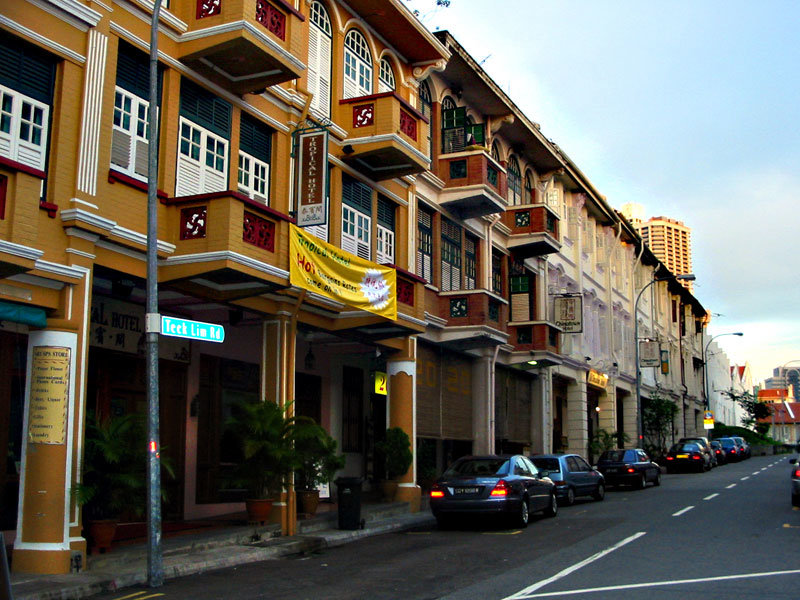
As places become more fashionable, and are mentioned in forums, websites like this and in offices and restaurants across the nation, there is one cast iron consequence – prices rocket. See Tiong Bahru for the perfect example. The key – especially in an island the size of Singapore, is to spot the new trends, the new places that are going to be the places to live in 5 years’ time. And then you need to strike while the iron is hot and the prices are still reasonable. Three areas that could very well fit into that category, all within a stone’s throw of each other are Little India, Jalan Besar and Farrer Park.
The area of Woodlands came into prominence with the building of the Johor-Singapore Causeway in 1923. It was from here that Singaporean residents would come in order to get across to Johor Bahru, and from there the rest of the Malaysian peninsular. Likewise it would be the first part of Singapore witnessed by those coming in the opposite direction. The customs checkpoint at Woodlands is something still very much remembered by the older generations of both Singaporeans and Malaysians alike.
Development proper began in the 1980’s with the building of several HDB residencies. These were added to and expanded upon, the last project reaching completion in 2004. Overall there are now a total of 112,175 HDB flats in the area, housing approximately 192,700 residents.
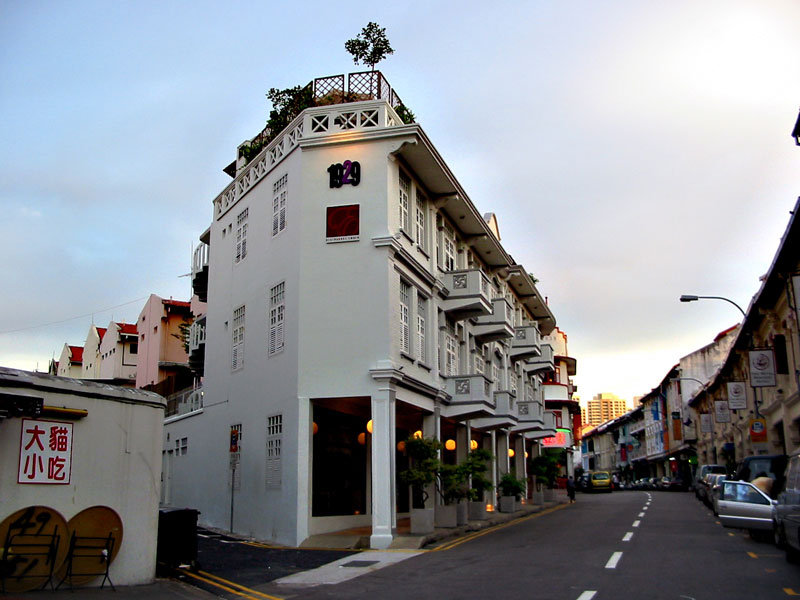
Hotel 1929 – An iconic boutique hotel along Keong Saik Road in Chinatown
Chinatown
One of three ethnic enclaves in Singapore (the other two being Kampong Glam and Little India), Chinatown still remains culturally and historically significant, a fact recognised by the URA who have designated many parts of the area as national heritage sites. Though it celebrates the past, it is an area very much looking to the future, and is a fantastically thriving, pulsating district right in the heart of Singapore.
A piece of legislation introduced at the back end of 2011 is going to have a dramatic effect on the Singaporean property market – meaning potential bargains for house hunters and on the flip side sizeable losses for developers.
It all stems from the ABSD – additional buyers stamp duty. This ticking time bomb, set in motion on the 8th December 2011, stated that developers had to not only complete all residential projects, but sell all of their units within 5 years of purchasing the land. Any units remaining unsold would then be liable to a levy of 10% of the purchase price of the site. That percentage was increased to 15% in January 2013.
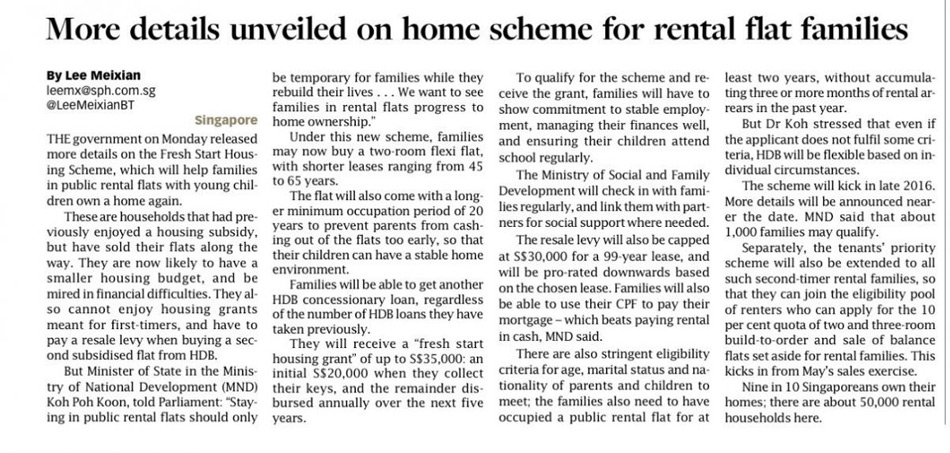
Singapore families who have been staying in rental flats may now be eligible to purchase smaller 2-room flexi flats now. Under this new Scheme, the eligible families will be given a housing grant of up to $35,000. Besides the normal 99-year lease 2-room flat, the applicants will also be given an option to choose shorter lease periods ranging from 45 to 65 years . However, unlike the 5-year Minimum Occupation Period (MOP), the MOP for 2-room flexi flats is 20 years. This is to ensure that the applicants will not be selling the flats too early and the children in the families will also get to stay in a stable home environment.
In order to be eligible for this scheme, the family will have to prove that they have been having a stable income and occupation and their children are attending school regularly. This new scheme will be commencing in late 2016 and more information will be updated again.
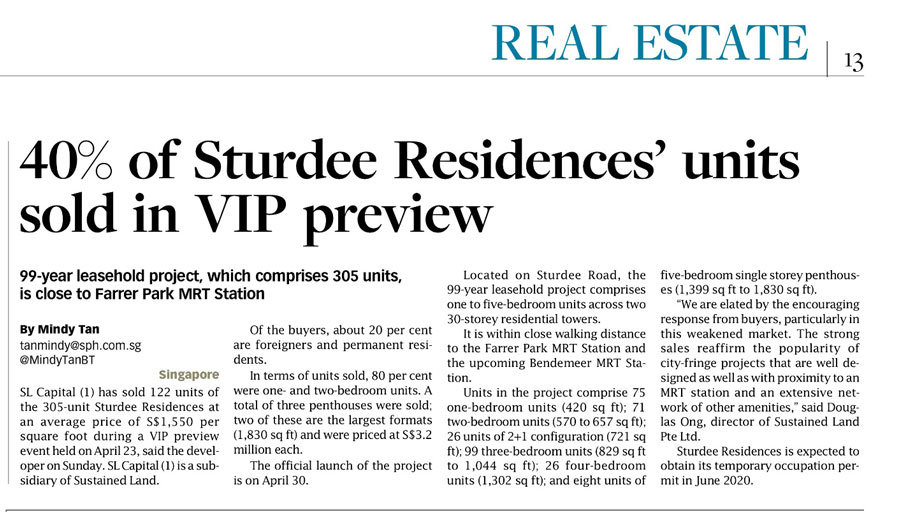
Below are some of the upcoming New launch Condo in the housing market now
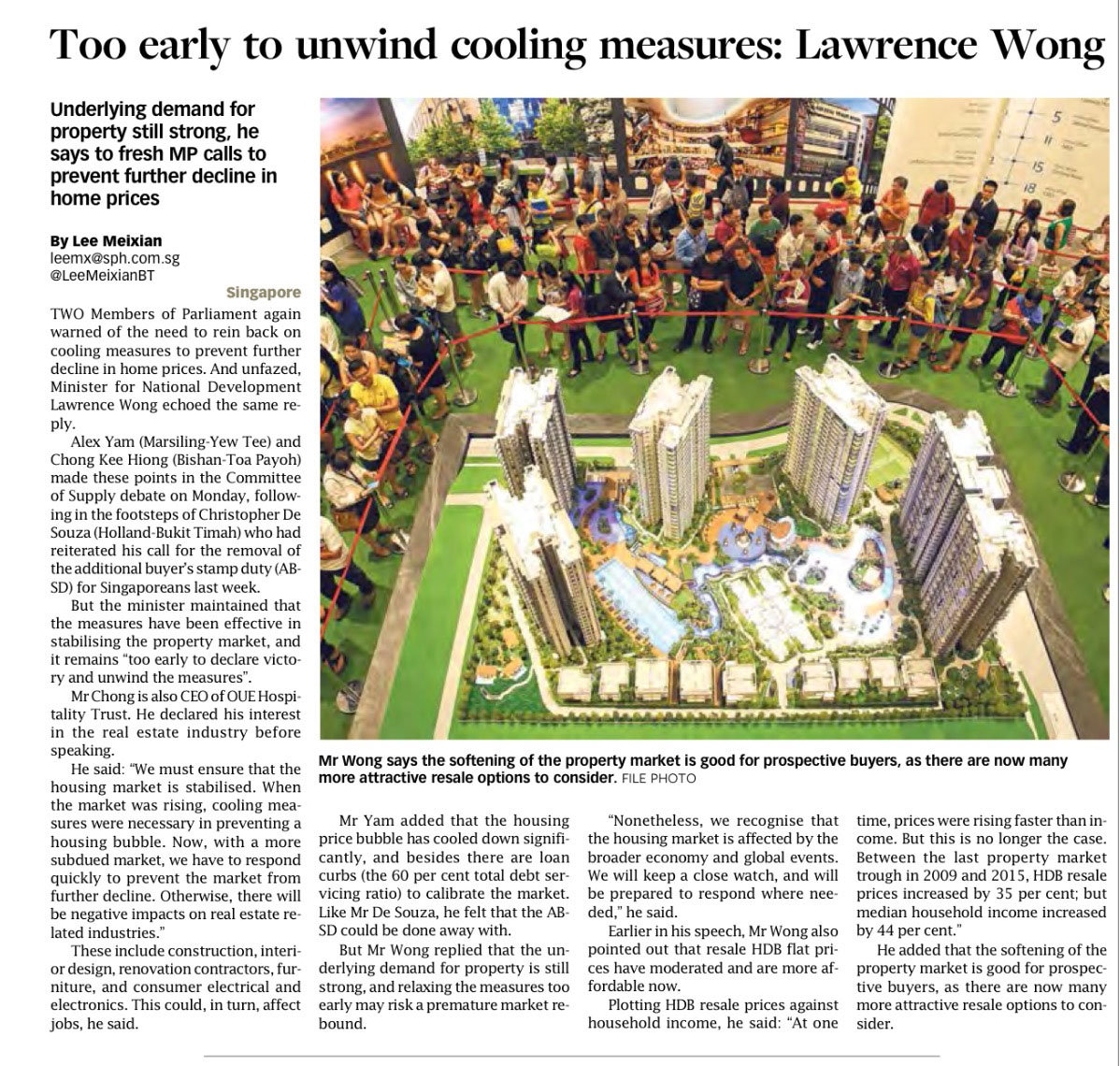
Despite countless requests by many including two members of the Parliament, the Minister of National Development had once again emphasised that it was still premature to call for a removal of the cooling measures. Some reckoned that the estate market in Singapore had mellowed down with the property bubble much deflated now, it was the right time to tweak the measures to prevent further deterioration and create a negative impact.
However, according to Mr Lawrence Wong the Minster of MND, the housing property had remained bright with strong demand, removing the property curbs could have led to a rebound instead. The prices of the resale HDB flats were actually more affordable compared to the past. With the softening of the market, property buyers were also given more attractive options.
Mr Wong also added that the property market could also be affected by external factors such as the global economy. Hence, they would definitely monitor the situation closely and ensured that appropriate actions would be taken when necessary.
So what are the new launch condos that have been selling well despite the implementations of the ABSD and much softened housing market? Below are some of the popular new launches in the market now,